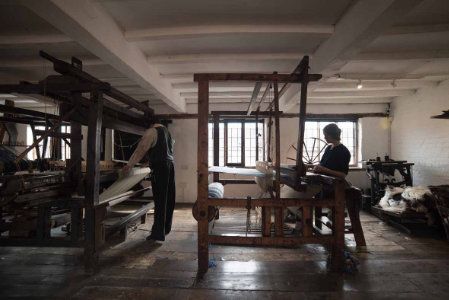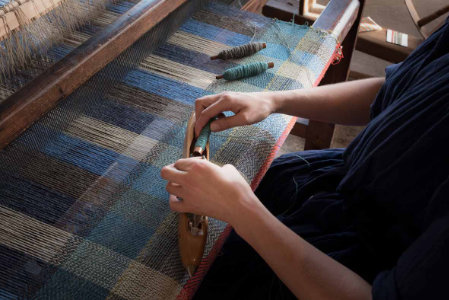



The Museum is open again for 2026 from May to the end of October – a month longer than our usual season. We look forward to welcoming visitors and will be offering demonstrations and activities throughout the summer which will be advertised on our social media pages and our website. These are always popular, and our weaver-in-residence programme allows visitors to really appreciate the skills involved in creating hand-woven cloth. We have also introduced more activities for children.
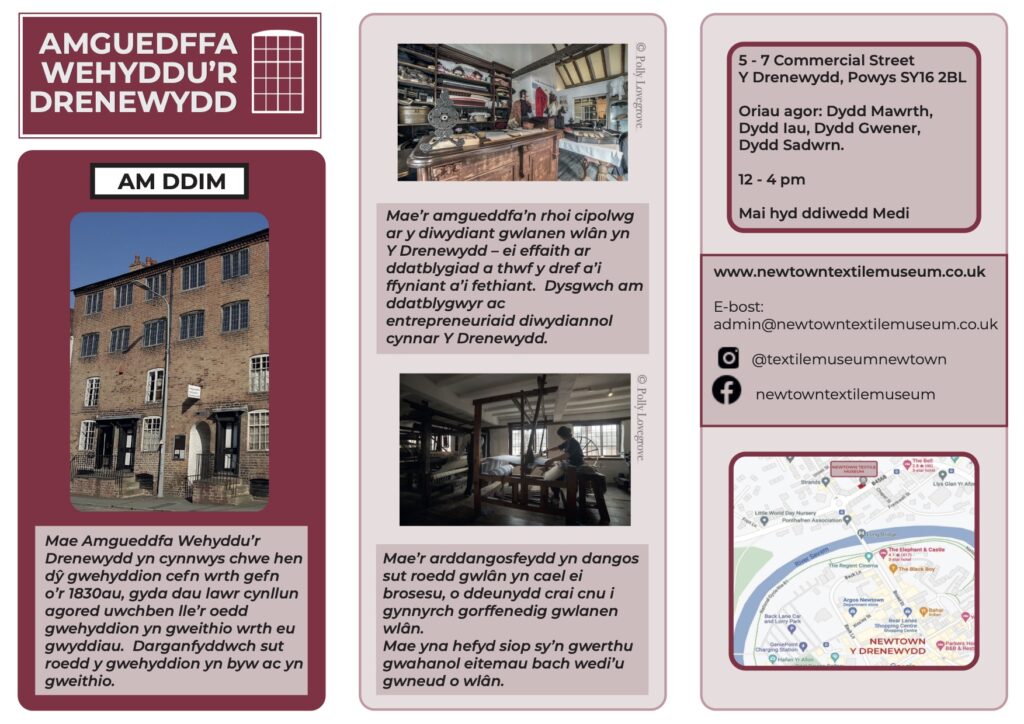
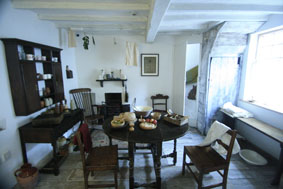
The Museum is housed in an 1830s hand-loom weaving factory which consisted of six back-to-back cottages which had one room downstairs and one room upstairs. Above these were two floors which housed up to 22 hand-looms. The building is largely intact and gives visitors a real sense of the life at the time. Newtown
Over the four floors of our original 1830s flannel weaving factory, we explore the lives of its former occupiers and the story of how Newtown became the centre of the Welsh textile industry in the nineteenth century. We offer an alternative view of Welsh history which is more often the story of extractive industries such as mining. Newtown by contrast was a developing manufacturing hub and was known as the ‘Leeds of Wales’ in the early 1800s as the town became the centre of a thriving hand-loom weaving industry.
Those living in our building at the time would have been aware of the changing nature of the town’s industries, with the decline of handloom weaving in a domestic environment during the century to becoming a factory-based activity.
This year we will have a fascinating new permanent exhibition which will draw together the story of the town’s development in the last quarter of the 1800s and the growth of the business of Pryce Jones and mail order, and his impact on the social life of the town The Museum tells these stories in the context of our heritage building. A walk-through tour is available online or in the Museum for those unable to access the upper floors.
Check out the website for the latest information.
Full details are on :
Links to social media sites:
Web: www.newtowntextilemuseum.co.uk
Facebook https://www.facebook.com/newtowntextilemuseum
Instagram: https://www.instagram.com/textilemuseumnewtown/
The Textile Museum in Newtown gives visitors a chance to see how the handloom weavers of the mid-19th century lived and worked.
The Museum is housed in an 1830s hand-loom weaving factory which consisted of six back-to-back cottages which had one room downstairs and one room upstairs. Above these were two floors which housed up to 22 hand-looms. The building is largely intact and gives visitors a real sense of the life at the time. Newtown was known as the ‘Leeds of Wales’ in the early 1800s as the town became the centre of a thriving hand-loom weaving industry.
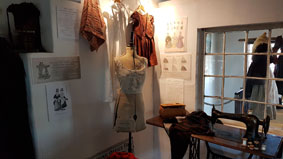
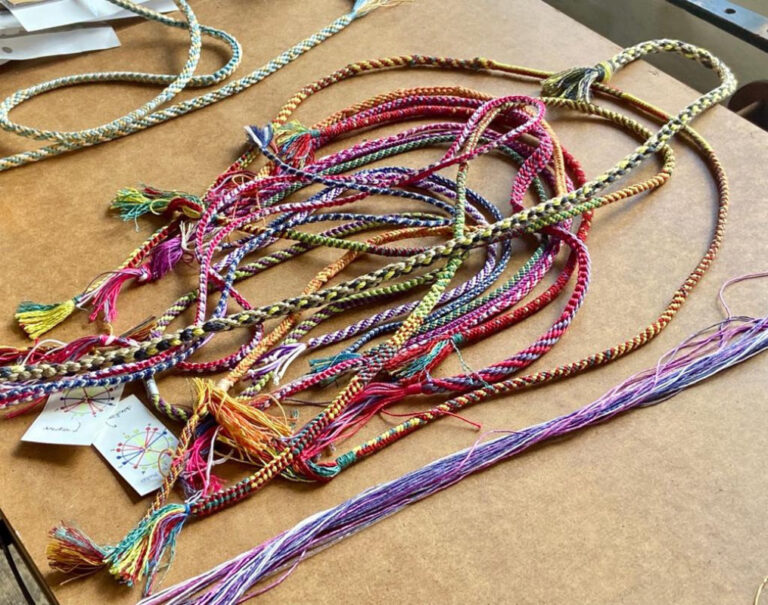
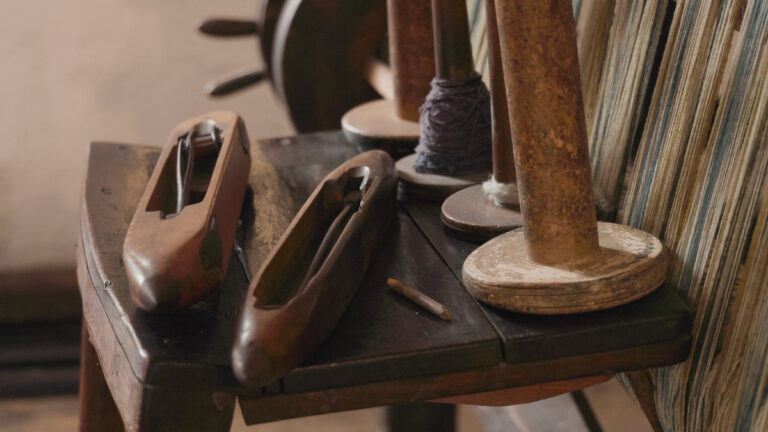
The stories we tell in the Museum relate to: the working and living conditions of the weavers and others who occupied the cottages; the journey of wool from ‘fleece to flannel’,; together with the industrial history of the town in the 19th century and associated trades in the town such as drapers, clog-makers and the leather industry. We also cover some of the significant people in the town including Pryce Jones. Credited with establishing the first Mail Order business in Britain he played a major role in the town’s prosperity in the second half of the 1800s. Family historians who have weavers and spinners as ancestors will enjoy seeing how they lived and worked. Regular spinning and weaving demonstrations are held where visitors can try their hand at these ancient crafts, and other crafts days are also held. See the website for details.