

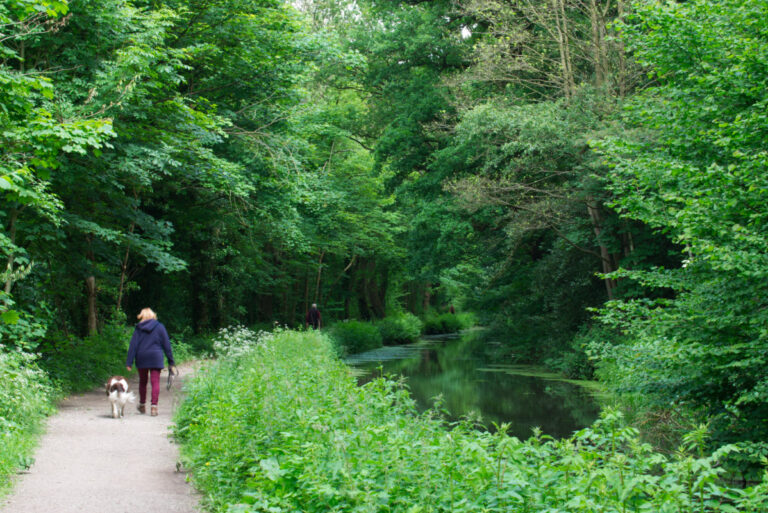


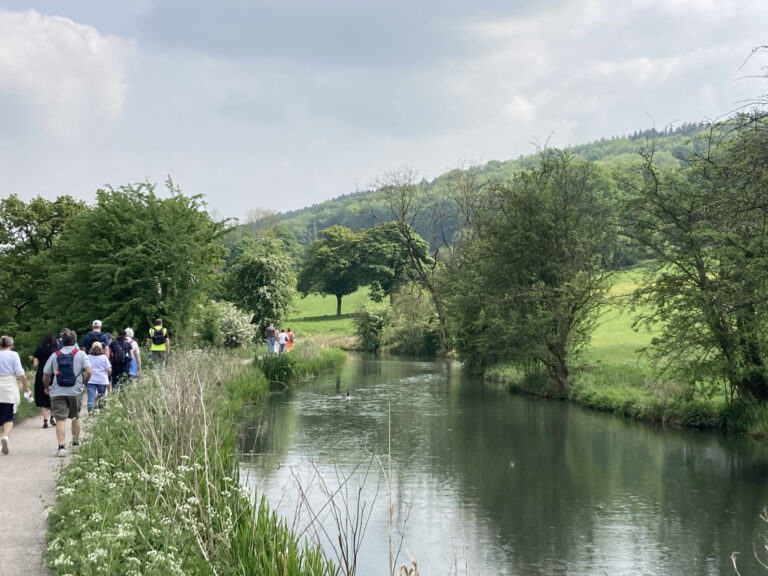
The Cromford Canal ran 23.3 kilometres from Cromford to the Erewash Canal at Langley Mill. The 10.5 kilometres of canal between Cromford and Ambergate which lie within the nominated World Heritage Site was constructed in the early 1790s under the direction of William Jessop assisted by Benjamin Outram. The canal was intended as part of a through route to Manchester but it was not until the Cromford and High Peak Railway was constructed between 1824 and 1830 that this vision became a reality.
The Cromford Canal promoters sought to unlock Derbyshire’s immense mineral wealth, especially its limestone. Apart from the obvious advantages to Sir Richard Arkwright for his mills, he too saw the opportunity presented by exporting lime and sought a monopoly in this trade on the canal in return for which he was prepared to lend his name to the promoters of the canal project. Only when he was finally persuaded that such a monopoly would be against the law did he agree to give the canal scheme his energetic attention. He also agreed to sell most of his garden to the Canal Company to construct the Cromford Wharf. With his assistance the Canal Bill was steered through Parliament in the face of considerable opposition.
The canal had a profound influence on the economic growth of central Derbyshire achieving a substantial outreach by means of its many wharves and linking tramroads. Thus Belper, apparently bypassed by the canal, derived huge economic benefits from it.
The canal terminus abuts Mill Lane opposite Cromford Mill. Cromford Wharf incorporates two warehouses, an office or counting house and two cottages. Once enclosed entirely by a stone perimeter wall, the wharf was home to a range of other facilities; these buildings have not survived.
Sorry, no records were found. Please adjust your search criteria and try again.
Sorry, unable to load the Maps API.


